


Why Mobile IP Rotation Is Becoming Part of the Modern Internet Infrastructure Toolkit

Mobile internet services reached 4.7 billion users worldwide in 2024, reports the GSMA in its State of Mobile Internet Connectivity 2025 findings. That scale makes mobile connectivity an important consideration for website developers, researchers, and infrastructure teams. As services reach people through different networks and locations, testing from one office connection offers a limited view.
Services described as Affordable 4G Rotating Proxies – Mobile IP Ranges illustrate how providers present access to cellular connections with changing outward-facing addresses. The terminology combines network type, address availability, and rotation into one offering. Those descriptions need careful interpretation: a product label does not establish geographic accuracy, connection quality, or suitability for a particular task.
What Does a Changing IP Address Actually Tell Us?
The Internet Engineering Task Force, through RFC 6598, describes shared address space for carrier-grade network address translation. This infrastructure helps providers support IPv4 connectivity while addresses remain constrained. It is important background because the address visible to a website need not represent an exclusive connection belonging to one individual subscriber.
Proxy rotation adds a separate operational choice: changing which outward-facing address carries selected traffic. The linked provider advertises that capability alongside cellular connectivity. For an infrastructure team, the useful question is therefore practical. Does the service provide a controlled way to compare network conditions, or merely a larger collection of addresses?
Why Different Network Perspectives Can Be Valuable
Consider a team checking its own regional storefront. A sensible experiment would compare the page through approved connections, record the location detected by the website, and examine whether regional settings behave as intended. Here, address diversity serves a defined testing question. The objective is finding inconsistent behavior, rather than generating traffic without a clear purpose.
This approach complements browser simulation. Google explains that Chrome DevTools can simulate mobile viewports, throttle connections, and override geolocation. Its documentation also warns that device simulation has limitations and recommends testing on actual devices. A cellular proxy should therefore be treated as another test input, rather than a substitute for a complete mobile testing environment.
For authorized research, the same principle suggests a disciplined workflow. Define the information needed, establish permission, and collect only what answers the research question. Where different network perspectives are relevant, document why each is included. Rotation becomes easier to justify when it supports a reproducible method instead of serving as an unexplained default.
Where Location Claims and Reliability Fall Short
Geographic flexibility has an important limit. MaxMind explains that mobile-network addresses may serve phones spread across considerable distances. Its databases sometimes provide broader regional information while withholding city or postal-code details. Consequently, selecting a mobile address associated with a region does not prove that a request represents someone standing in a particular neighborhood.
For location-sensitive testing, that distinction should shape the interpretation of results. Check what location the target service actually assigns, and record uncertainty alongside the outcome. If the experiment requires precise coordinates, an IP-based test alone is insufficient. Treating approximate network geography as exact physical presence would undermine the value of the exercise.
Reliability deserves equally careful evaluation. Before adopting a service, teams should measure response times, failed requests, and whether addresses remain stable for the required test period. These are acceptance criteria, not assumptions about every provider. A useful comparison should hold the browser, account, and test steps constant while changing one network variable at a time.
Platform Restrictions Remain Part of the Equation
Changing addresses does not guarantee that a platform will accept automated traffic. Cloudflare documents rate-limiting characteristics that include IP addresses, cookies, headers, and other request attributes. Its controls demonstrate why infrastructure decisions cannot rely on IP rotation alone: services can evaluate traffic through several signals and apply restrictions beyond a single address.
Responsible collection also requires separating crawler guidance from permission. RFC 9309, published by the Internet Engineering Task Force, specifies the robots exclusion protocol and states that its rules are not access authorization. Teams should honor applicable crawler instructions while separately establishing whether their proposed access and use are permitted. A reachable page is an incomplete basis for that decision.
A Specialized Tool With a Defined Role
The strongest argument for rotating mobile connections is selective use. As with evaluating technology for business, the decision should begin with a clear operational need. Mobile proxies deserve consideration when an approved task requires different cellular network perspectives. Their value should be demonstrated through better evidence, clearer testing, or useful comparisons. Address quantity alone is a weak measure of infrastructure quality.
As internet systems develop, mobile proxies fit best within a broader testing and research toolkit. The sensible direction is stronger measurement and accountability: verify locations, evaluate reliability, respect restrictions, and preserve reproducible results. Used within those boundaries, rotation can support infrastructure work without becoming the organizing principle behind it.
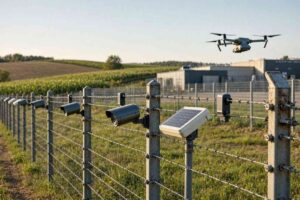 For more than a century, barbed wire fence NSW has been one of the simplest ways to mark a boundary and control access to land. Yet the basic idea of a barbed wire fence is now being combined with modern technology. This shift is changing how property owners, farms, utilities, and large facilities think about perimeter security.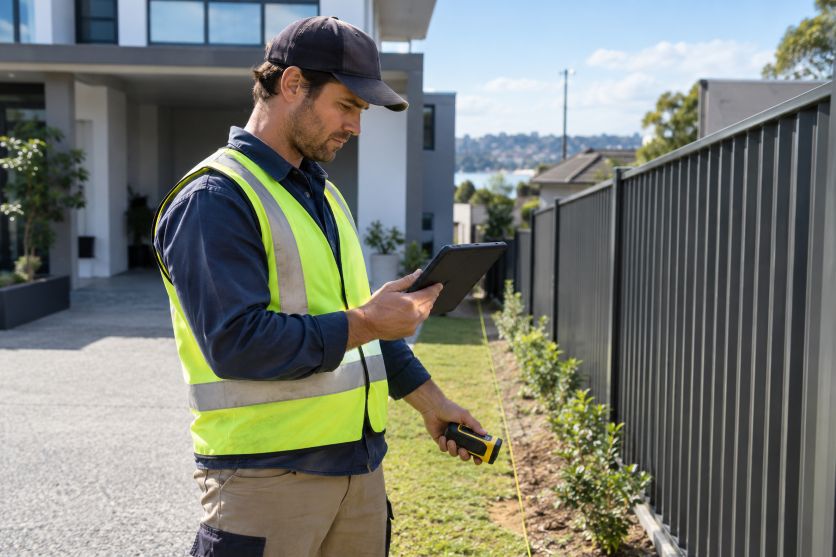







 In the digital world, technology is more than just a commodity. It has the potential to transform lives and make people healthier.









 Reverse Osmosis:

 Centuries-old craftsmanship defines the timeless appeal of Jesus sandals. These iconic sandals, rooted in ancient designs, have walked through history with unmatched simplicity and durability. Today, technology is breathing new life into this heritage footwear, blending tradition with cutting-edge innovation. From 3D modeling to sustainable tanning techniques and online fitting tools, the Jesus sandals mens market is undergoing a transformation that keeps it relevant for modern wearers. This evolution honors the past while embracing the future, ensuring these sandals remain a staple in wardrobes worldwide.
 Long shifts, constant movement, and hours spent on hard hospital floors take a toll on the body of nurses, especially the feet. Foot pain, fatigue, and related issues like back strain are common among nurses. Traditionally, comfortable shoes with good support were the only defense. However, technology is now stepping in to change how nurses care for their patients’ feet.
 Pomskies bring joy with their fluffy coats and playful energy. These charming hybrids of Pomeranians and Siberian Huskies thrive on attention and activity, making them perfect for tech-savvy owners. Modern pet technology, from smart collars to mobile apps, transforms how we care for these lively dogs. It offers tools to keep them safe, healthy, and happy, while easing the responsibilities of ownership.
 Technology continues to shape how we shop at TestScout24 and earn online. For affiliate marketers, this means more tools, faster platforms, and smarter ways to sell. An online affiliate shop allows anyone to earn by promoting products. When someone clicks your link and buys, you earn a commission. With technology, setting up this kind of shop has become easier than ever.


 One of the most notable advancements in the field of house painting is the introduction of
 A MOT check, short for
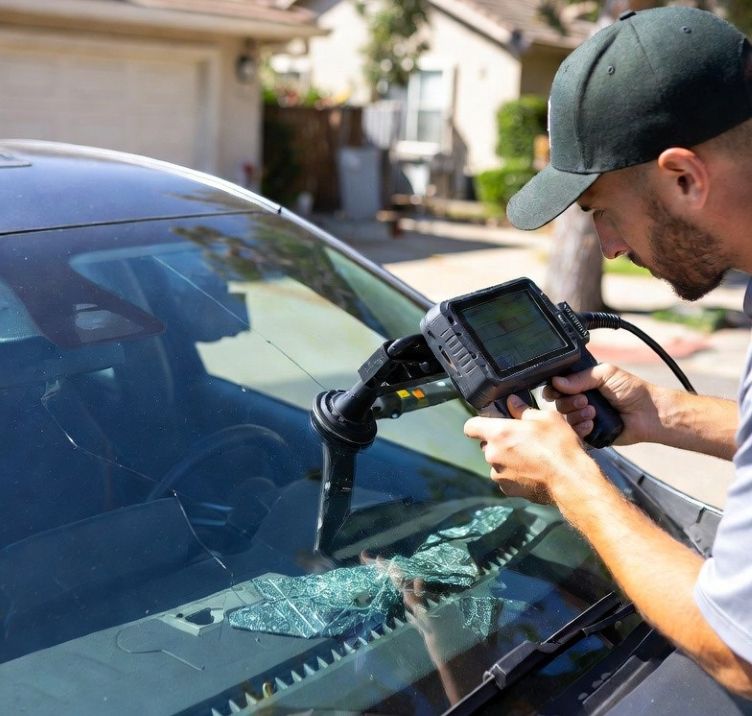
  Benefits of Regular MOT Checks for Your Vehicle
 Actually, each model, whether hanging as pendant light lamp shades or as branch-style crystal chandeliers, has its own set of different functions that can be remotely activated via a control panel located at the base of each lighting fixture. The following are other examples of such functions:
 Remote controlled lighting systems are ideal for large spaces like restaurants and hotels, which allow the turning on or off of the lighting system, even as the remote controller is situated in another room. Remote controlled lighting systems are also advantageous in
  The fusion of technology and marketing has revolutionized the way businesses interact with their customers. Marketing agency calgary is at the forefront of this transformation, navigating a complex digital labyrinth to deliver innovative and personalized campaigns.

 In home improvement and exterior design, the task of Skilled Fencing has been transformed by the advent of technology. Gone are the days when this chore was purely manual labor, requiring only a hammer, some nails, and a good deal of elbow grease. Today, technological advancements have revolutionized the way fences are planned, designed, and installed, making the process more efficient, accurate, and even enjoyable.