

Technology Is Changing the Role of the Barbed Wire Fence
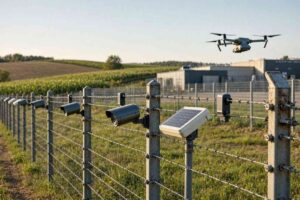 For more than a century, barbed wire fence NSW has been one of the simplest ways to mark a boundary and control access to land. Yet the basic idea of a barbed wire fence is now being combined with modern technology. This shift is changing how property owners, farms, utilities, and large facilities think about perimeter security.
A traditional fence works as a physical barrier. It shows where a property begins and ends, and it discourages people or animals from crossing certain areas. Technology adds another layer. Sensors, cameras, wireless networks, and automated alerts can now work with fencing systems. Instead of relying only on a person to inspect the fence, owners can receive information about activity around the perimeter in real time.
In many places, a basic barbed wire fence is still enough. However, where security, livestock control, or remote monitoring matters, technology can make a simple fence more useful. It can help people react faster, reduce the need for constant patrols, and improve the way large areas are managed.
Smart Monitoring Around Fence Lines
One of the biggest changes in perimeter security is the use of smart monitoring. Modern sensors can detect movement, vibration, pressure, or changes in a fence line. If someone climbs, cuts, or pushes against a section, the system can send an alert to a phone, computer, or control room.
This is especially useful for large properties. A farm, warehouse site, utility area, or remote storage yard may have hundreds of metres of fencing. Checking the entire boundary several times a day takes time. A connected monitoring system can help identify the exact section where unusual activity happened.
Cameras can also support the fence. Motion-activated cameras can record people, vehicles, or animals near a boundary. For example, the system may be able to ignore small animals while paying closer attention to a person moving near a restricted area.
Wireless communication has made these systems easier to use. Today, some sensors and cameras can send data through mobile networks, Wi-Fi, or low-power wireless systems. Solar panels can also power devices in places where normal electricity is not available.
GPS and digital mapping add another benefit. Property owners can create a map of the entire fence line and mark gates, damaged sections, access points, and high-risk areas. When a problem is reported, workers can go directly to the right location. This saves time and makes maintenance more organised.
Drones are another tool that may support fence inspections. On very large properties, a drone can provide an aerial view of sections that are difficult to reach on foot or by vehicle. It can help identify fallen posts, damaged wire, vegetation growth, or signs of entry.
Even livestock management can benefit from technology. Farmers can use GPS collars, digital tags, or tracking systems to see where animals are moving. When this information is combined with a physical barbed wire fence, it becomes easier to notice when livestock are gathering near a weak area or moving outside their normal range.
Why Physical Fencing Still Matters in a Digital World
Technology can provide useful information, but it cannot always replace a physical barrier. A camera can show that someone crossed a boundary, but it does not stop the crossing. A sensor can report movement, but it does not guide livestock back into a field. This is why traditional fencing still has an important role.
A barbed wire fence creates a clear physical boundary. In agricultural areas, it can help keep cattle and other large animals within designated land. Around industrial or restricted sites, it can discourage casual entry and make access more difficult. When combined with signs, gates, cameras, and monitoring tools, it can become part of a wider security system.
The key is to match the fence and technology to the property. A small rural field may only need strong posts and properly tensioned wire. A remote energy site may benefit from sensors and cameras. A large farm may use digital mapping to track repairs. There is no single setup that fits every location.
Maintenance is also important. Smart devices cannot solve problems caused by broken posts, loose wire, corrosion, or heavy vegetation. The physical fence still needs regular checks. In fact, technology works best when it supports good maintenance rather than replacing it.
Data can make this process easier. A digital record can show when a section was repaired, when a gate was serviced, or where repeated damage has happened. Over time, this information can help owners decide where stronger materials, better drainage, improved access control, or more frequent inspections are needed.
Modern systems may also improve safety for workers. Instead of sending staff to inspect every part of a large property after an alarm, a camera or sensor can provide more information first. This can help teams decide what equipment they need and whether a situation may require additional security support.
Adding technology increases the initial price of a fencing system. However, it may reduce some long-term costs by lowering the number of unnecessary inspections, helping teams find damage quickly, and preventing small problems from becoming larger ones. The value depends on the size of the property and the level of risk.
The future of fencing will likely involve a mix of simple materials and digital tools. Barbed wire is not becoming obsolete just because sensors and cameras are improving. Instead, the fence is becoming one part of a connected system.
A strong barbed wire fence can still do the basic job it has done for generations. Technology can make that job easier to monitor, maintain, and manage. Together, physical fencing and digital tools can provide a practical approach to modern land control and perimeter security. The best solution is not always the most advanced one. It is the one that fits the land, the purpose, the budget, and the level of protection required.